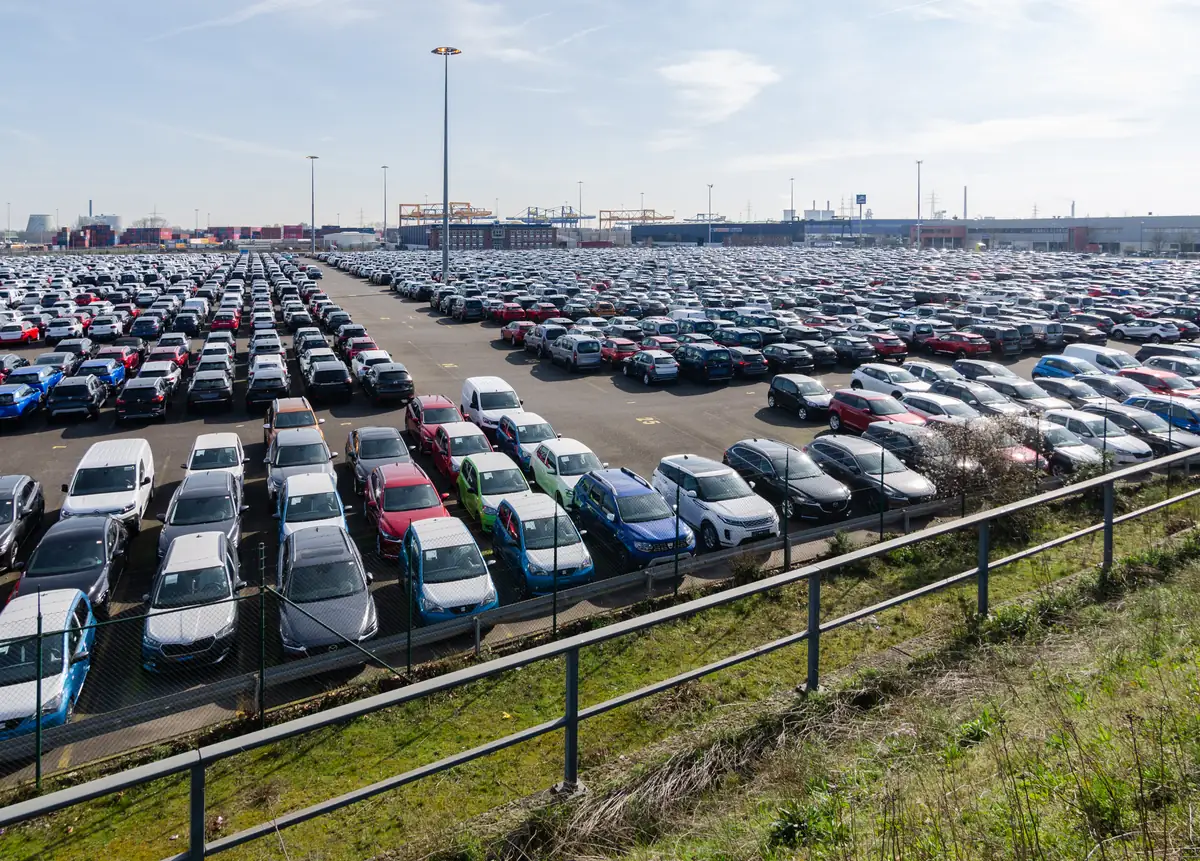
Buying cars in Europe to sell in Spain is one of the clearest ways for a dealership to earn a margin: more supply, better prices in some segments and well-equipped cars. But the margin is decided before you buy, with a calculation that has more lines than it seems. This is the one we do.
The calculation in one line
Margin = the price you will sell the car for in Spain − everything it costs to get it ready for sale. It seems obvious. The usual mistake is to get one of the two sides right and be too optimistic about the other.
1. The selling price in Spain: the trickiest figure
It is not the highest price you have seen advertised. It is the price a car like that really sells for: the same version, the same year, similar mileage and comparable equipment.
- Look at several comparable listings in Spain, not just one. Leave out the ones that are not truly similar (a different version, a different gearbox, far higher mileage).
- Check how long they have been online. A price that has been advertised for three months is not a selling price.
- Deduct the discount usually negotiated on that type of car.
2. The net purchase price
The listing price is the starting point, but you need to know what it includes. If the seller is a trader and the car is sold with deductible VAT, a Spanish dealership with an intra-EU VAT number buys it without the VAT of the country of origin (an exempt intra-EU supply) and the VAT is declared in Spain. If it is sold under the margin scheme (REBU in Spain, “Differenzbesteuerung” in Germany), the price includes the VAT of the country of origin and it is not shown separately. The scheme also determines how you will sell the car afterwards, so how each car is taxed has to be confirmed by your tax adviser before you buy.
3. What it costs to bring it over and register it
- Insured transport from the seller to your premises. It varies a great deal depending on the route and whether the lorry is full.
- Registration tax. It depends on the official CO2 emissions (WLTP) and is calculated on the taxable value that the Spanish tax office (Hacienda) sets with its tables according to the car’s age, not on what you paid. It is the line that eats the most margin when it is miscalculated: moving up a CO2 band raises the rate by five percentage points.
- Pre-registration ITV and homologation. With a Certificate of Conformity (COC), a formality. Without one, more time and more cost.
- DGT fees, plates and registration agent. Not much each on their own; not so little added together.
4. What it costs to get it ready for sale
- Preparation: a thorough valet, small bodywork repairs, tyres and any outstanding maintenance.
- The warranty you will give the customer and what it costs you on average per car.
- Days in stock. A car that is slow to sell carries a financing cost and takes up space. Work with the number of days it really takes you to sell that type of car, not the best case.
An example of the calculation
With round, made-up figures, excluding VAT, just to show how the calculation is built. A car with 150 g/km of CO2 (4.75% band):
| Item | Amount |
|---|---|
| Realistic selling price in Spain | €32,000 |
| Net purchase price | − €23,500 |
| Transport | − €700 |
| Registration tax | − €1,100 |
| ITV, fees, plates and registration agent | − €450 |
| Preparation and warranty | − €900 |
| Cost of 45 days in stock | − €250 |
| Margin | €5,100 |
Now change just one thing: in the documents the car is rated at 163 g/km, not the 150 in the listing. It moves into the 9.75% band, the tax more than doubles and the margin falls by more than €1,100 without the car having changed at all. The same happens if it takes 120 days to sell instead of 45.
Where the margin goes
- Using the CO2 figure from the listing instead of the one in the documents.
- Taking the selling price from the most expensive listing rather than from the comparable cars that actually sell.
- Not counting days in stock or the warranty.
- Buying a car without a COC or without complete documents, which takes weeks longer to register.
- Buying without anyone having seen the car: the repairs that do not show up in the photos.
Car by car, or with a tool
This calculation can be done in a spreadsheet, and for a few cars a month it works. The problem comes with volume: comparing hundreds of listings from several countries, each with its own VAT scheme, emissions and transport, and redoing the sums every time a price changes. That is what the dealer panel is for, the tool we buy with ourselves: it searches car sites in 14 countries and shows, on every listing, the final price in Spain and the margin.